Visual first
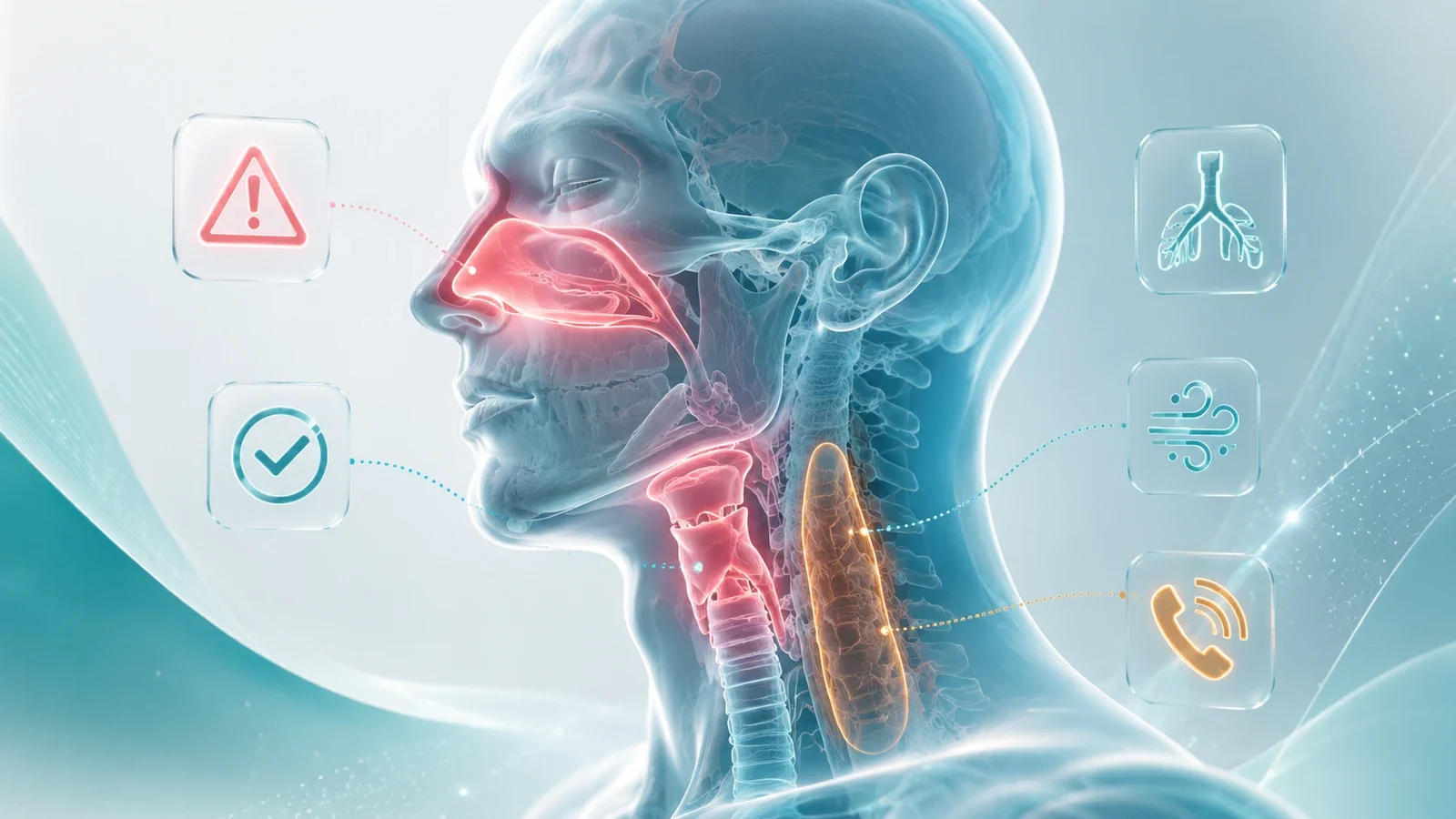
ENT is spatial. The platform uses visual teaching to make anatomy and procedures easier to understand.

About ENT Induction
ENT Induction is a practical, visual learning platform for clinicians who want to understand ENT anatomy, approach common presentations calmly and make safer early decisions before escalating.
Educational resource only. ENT Induction supports learning and preparation; it does not replace clinical supervision, local policy or senior decision-making.

Why it exists
Many clinicians meet ENT late, briefly or under pressure. The specialty can feel difficult because the anatomy is three-dimensional, the equipment is unfamiliar and the first steps are often learned during busy clinical work.
ENT Induction was created to make that first exposure clearer: a calm place to revise common presentations, build spatial understanding and connect anatomy with the decisions clinicians actually need to make.

What guides the platform
Every section should help learners move from uncertainty to a clearer mental model of anatomy, equipment, presentation and next step.
ENT is spatial. The platform uses visual teaching to make anatomy and procedures easier to understand.
Learners can follow focused routes instead of piecing together scattered notes before clinical exposure.
Content is framed around common presentations, practical tasks and escalation principles.
The aim is not just to store facts, but to build a mental model learners can return to on placement.
ENT can be intimidating at first. The platform is written to reduce friction and make learning approachable.
Learning content supports preparation and revision, while signposting the importance of local guidance and senior help.
Who it is for
Use ENT Induction before a placement, at the start of an ENT job, while revising common presentations, or as a visual support for teaching.
Build foundations before clinical placements and ENT teaching sessions.
Prepare for ENT referrals, on-calls and common emergency presentations.
Strengthen recognition of common ENT presentations and escalation thresholds.
Review red flags, first steps and escalation principles for acute ENT.
Revisit anatomy and structured teaching resources during training.
Use visual material to support tutorials, induction sessions and workplace teaching.
Creator
Robert Maweni is an Oxford-based ENT registrar completing specialist training with a fellowship in Rhinology and Facial Plastic Surgery. His clinical focus includes advanced endoscopic sinus surgery, rhinoplasty and facial skin cancer reconstruction.
ENT Induction brings that clinical and medical education focus into a practical, interactive format for learners who need clearer ENT anatomy, safer first steps and more confidence in clinical settings.
“The aim is simple: make ENT feel less unfamiliar before learners meet it in a busy clinical environment.”
How it is built
The goal is to help learners recognise the situation, understand the relevant anatomy and know how to prepare their next step.
Start with the presentations and tasks learners commonly meet during placements, on-calls and induction.
Use visual teaching to make the spatial relationships easier to understand and remember.
Relate anatomy and presentations back to red flags, first steps, documentation and escalation.
Build short, focused resources that are easy to revisit before teaching, clinical exposure or revision.

Understand where things are and why they matter clinically.
Review high-yield first steps and escalation principles.

Short routes for induction, sinus, nasendoscopy and more.
Testimonials
Reflections from clinicians using induction-style ENT teaching to feel clearer, safer and more prepared.

“The most useful induction to a speciality I’ve ever had. Very high yield topics delivered in a succinct way.”
Dr MoeziniaFoundation Trainee
“From the emergency bag to nasendoscopy, I felt more prepared for my first on-call than in any other rotation.”
Dr KudhailGP Trainee
“A thorough, thoughtful induction with an excellent overview of common ENT pathologies and key red flags.”
Dr ParleFoundation Trainee
“After the induction I felt more comfortable tackling common ENT pathologies on call.”
Dr BakerGP Trainee
“The ENT induction really helped to boost my confidence going into ENT on-calls.”
Dr ToddFoundation Trainee
“Comprehensive and easy to understand sessions. I especially enjoyed the interactive nasendoscopy session.”
Dr MannFoundation TraineeKeep exploring
Use the live resource hub to move from the about page into modules, knowledge base notes and practical learning routes.
Move between modules, resources, articles and support.
Stay updated
Join the update list for practical ENT learning releases, new visual resources and platform announcements.
Receive practical ENT learning updates and new module releases.
Required fields are marked clearly. Submissions are stored in WordPress for follow-up.
Questions
A few practical notes on how to use ENT Induction safely and effectively.
No. It is an educational resource to support learning and preparation. It does not replace local guidelines, clinical supervision or senior decision-making.
It is designed for medical students, foundation doctors, GP trainees, emergency clinicians, ENT trainees and educators who want structured, visual ENT learning.
Yes. It can help learners prepare for ENT exposure and give educators a visual framework, while local policies and pathways remain essential.
Start with the core courses and induction routes, then use the knowledge base and focused modules to revisit anatomy and common clinical presentations.
Start learning
Explore the modules, review the knowledge base and use the platform as a practical visual companion to clinical training.